FDA Approves AKEEGA for BRCA2+ Prostate Cancer as the First Precision Therapy
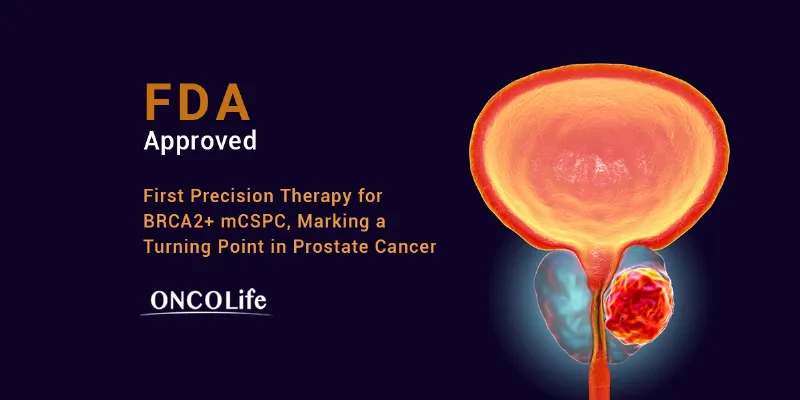
FDA has approved AKEEGA (niraparib and abiraterone) as the first precision therapy for BRCA2+ metastatic castration-sensitive prostate cancer (mCSPC), following results from the Phase 3 AMPLITUDE trial showing a 54% reduction in radiographic progression or death and a 59% delay in symptomatic progression versus standard therapy. In BRCA2+ patients, median rPFS was not reached, underscoring the regimen’s strong biomarker-driven clinical benefit.
The treatment landscape for metastatic castration-sensitive prostate cancer (mCSPC) has expanded with a landmark FDA approval that introduces the first precision medicine option for patients with BRCA2+ disease. The agency has authorized AKEEGA, a dual-action tablet combining niraparib and abiraterone acetate, to be used with prednisone in adults with deleterious or suspected deleterious BRCA2+ mCSPC. The decision positions this combination as the first PARP-based regimen approved for this molecularly defined population, addressing a long-standing therapeutic gap.
BRCA alterations are present in roughly one quarter of patients with metastatic castration-sensitive disease and are known to drive more aggressive tumor biology and earlier progression. Clinicians have had few targeted options for these individuals despite advances in systemic therapy.
"There remains an urgent need for novel therapies for patients with BRCA2-mutated mCSPC, who face significantly faster disease progression and often shorter survival compared to those without the mutation," said Dr. Bradley McGregor, Director of Clinical Research for LCGO at Dana-Farber Cancer Institute. “AMPLITUDE is the first study to show that this precision medicine combination of a PARP inhibitor with an androgen receptor pathway inhibitor delays both radiographic and symptomatic disease progression.”
A 54% reduction in disease progression risk
The approval is supported by the Phase 3 AMPLITUDE trial, a randomized, double-blind study enrolling 696 patients with homologous recombination repair gene-mutated metastatic castration-sensitive disease. All participants received ongoing androgen deprivation therapy. In an exploratory subgroup analysis of 323 patients with BRCA2 mutations, niraparib plus abiraterone acetate with prednisone reduced the risk of radiographic progression or death by 54 % compared with placebo plus abiraterone and prednisone, corresponding to a hazard ratio of 0.46 with a 95 percent confidence interval of 0.32 to 0.66.
Median radiographic progression-free survival was not estimable in the investigational arm, whereas it reached 26 months in the control arm. FDA reviewers noted that the overall efficacy improvement in the HRR-mutated population was driven largely by the BRCA2-mutated subgroup.
The regimen also significantly delayed symptomatic progression, extending time to clinically meaningful deterioration by 59%. Early overall survival data, evaluated at the first interim analysis, showed 36 deaths in the niraparib arm compared with 55 in the placebo group.
Mahadi Baig, M.D., Vice President and Head of Solid Tumors, Johnson & Johnson Innovative Medicine, emphasized the broader clinical implications, stating, “This expanded indication for AKEEGA reflects our commitment to push the boundaries of science and deliver more personalized, effective treatment options across the prostate cancer continuum. Supported by strong clinical data, AKEEGA is now the first and only PARP-based precision medicine combination treatment in BRCA2-mutated mCSPC, offering patients hope for more time with a new way to potentially delay their cancer from progressing.”
Safety and dosing considerations
Safety findings were consistent with the known profiles of the individual agents. The most common adverse events, occurring in at least 20 percent of treated patients, included hematologic abnormalities, musculoskeletal pain, fatigue, hypertension, gastrointestinal symptoms, electrolyte changes, elevated liver enzymes, and edema. The FDA label also carries warnings for myelosuppression, cardiovascular events, hepatotoxicity, adrenocortical insufficiency, hypoglycemia, and posterior reversible encephalopathy syndrome.
The recommended regimen consists of 200 mg niraparib and 1,000 mg abiraterone acetate taken orally once daily, combined with 5 mg prednisone once daily. Treatment should continue until disease progression or unacceptable toxicity. Patients must also receive concomitant gonadotropin-releasing hormone therapy or have undergone bilateral orchiectomy.
A new chapter for biomarker-driven care
The approval underscores a pivotal shift toward biomarker-guided strategies in early metastatic prostate cancer. The dual-action mechanism of niraparib, a selective PARP inhibitor, and abiraterone acetate, a CYP17 inhibitor, targets both DNA repair vulnerabilities and androgen-driven tumor signaling. For patients carrying BRCA2 alterations, this combination offers a precision approach aligned with disease biology rather than a one-size-fits-all paradigm.

Comments
No Comments Yet!