FDA Approves First All-Oral INQOVI Plus Venetoclax Regimen for Newly Diagnosed AML
14 May 2026
Key Takeaways
- The FDA has approved INQOVI (decitabine and cedazuridine) plus venetoclax for newly diagnosed AML in adults aged 75 years or older, or those ineligible for intensive induction chemotherapy.
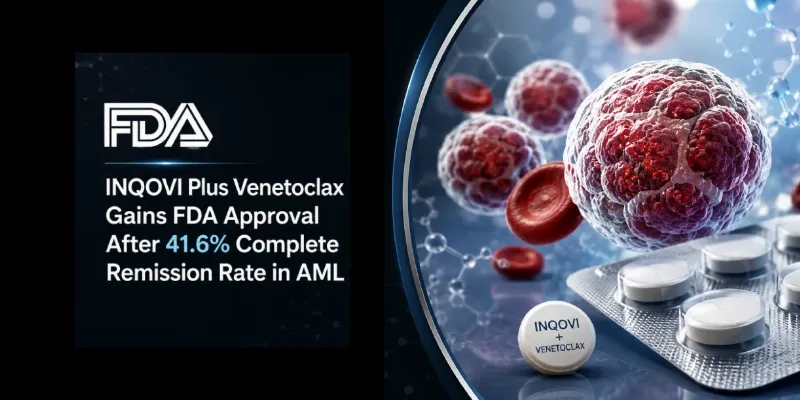
- In the Phase 2 ASCERTAIN-V study, 41.6% of patients achieved complete remission, with median duration not reached, establishing the first FDA-approved all-oral combination regimen for this population.
Taiho Pharmaceutical announced that the U.S. Food and Drug Administration has approved INQOVI® (decitabine and cedazuridine) in combination with venetoclax for adults with newly diagnosed acute myeloid leukemia (AML) who are 75 years or older, or who have comorbidities that preclude the use of intensive induction chemotherapy. The approval establishes the first FDA-approved all-oral combination regimen for this AML population, offering a potential alternative to parenteral hypomethylating agent-based treatment approaches that often require frequent hospital or infusion center visits.
Approval Supported by Phase 2 ASTX727-07 Data
The approval is based on Study ASTX727-07, also referred to as ASCERTAIN-V, a Phase 2, single-arm, open-label clinical trial evaluating oral decitabine and cedazuridine tablets in combination with venetoclax in 101 adults with newly diagnosed AML who were either 75 years or older or had comorbidities preventing intensive induction chemotherapy.
Efficacy was established on the basis of complete remission (CR) and duration of complete remission (DoCR). In the study, 42 patients achieved a CR, corresponding to a complete remission rate of 41.6% (95% CI: 31.9, 51.8). The median time to CR was two months, with a range of 0.4 to 15.3 months. Median duration of CR was not reached, with observed responses ranging from 0.5 to 16.3 months.
Oral Dosing Given on Days 1 to 5 of Each 28-Day Cycle
The recommended dose of INQOVI in combination with venetoclax is one tablet containing 35 mg decitabine and 100 mg cedazuridine, taken orally once daily on Days 1 through 5 of each 28-day cycle, until disease progression or unacceptable toxicity.
According to the approval announcement, no new safety concerns were reported. The prescribing information includes warnings and precautions for myelosuppression and embryo-fetal toxicity, which remain clinically important considerations in the management of patients receiving hypomethylating agent-based therapy and venetoclax-containing regimens.
Taiho Says Oral Regimen May Reduce Treatment Burden
“This FDA approval represents a significant milestone for patients with newly diagnosed acute myeloid leukemia who are not candidates for intensive induction chemotherapy,” said Peter Melnyk, President and Chief Executive Officer of Taiho Oncology. “With the approval of an all-oral regimen, INQOVI in combination with venetoclax brings a new treatment option to this patient population and underscores our commitment to advancing innovative, patient-focused therapies in hematologic malignancies.”
INQOVI is already approved in the U.S. and Canada for adults with myelodysplastic syndromes and chronic myelomonocytic leukemia. Its use in AML, together with venetoclax, extends the clinical role of an oral hypomethylating regimen into a population where treatment feasibility and patient burden are central issues.
Older patients with AML often face repeated clinic visits, close blood count monitoring, infection risk management, and supportive care needs. An all-oral regimen does not remove the need for careful monitoring, but it may change how therapy is delivered and potentially reduce the logistical burden for selected patients and caregivers.
“This approval marks an important step forward in expanding how treatment can be delivered for this patient population, offering an all-oral option that can potentially reduce the overall treatment burden associated with receiving treatment in hospitals or infusion centers. We believe this approach has the potential to make a meaningful impact for patients and caregivers,” said Harold Keer, MD, PhD, Chief Medical Officer of Taiho Oncology.
AML remains one of the most aggressive hematologic malignancies, particularly in older adults. Taiho noted that an estimated 22,720 people in the United States are expected to be diagnosed with AML in 2026, and more than half may be ineligible for intensive induction chemotherapy because of advanced age or underlying health concerns.



Comments
No Comments Yet!