FDA Approves Bizengri as First Targeted Therapy for NRG1 Fusion+ Cholangiocarcinoma
9 May 2026
Key Takeaways
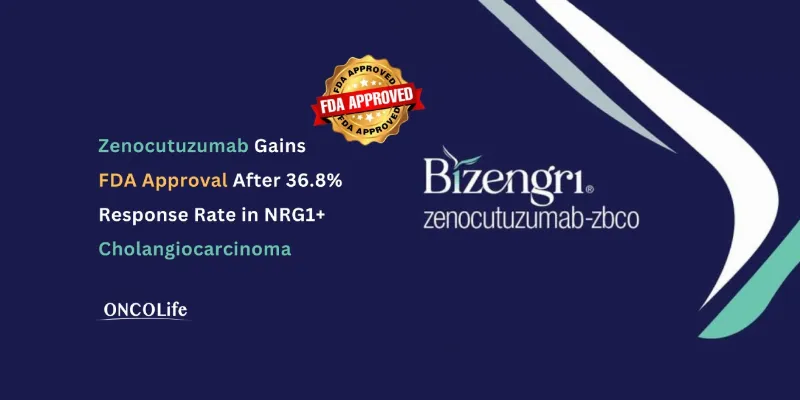
- The FDA has approved zenocutuzumab-zbco (BIZENGRI) for adults with advanced, unresectable or metastatic NRG1 fusion-positive cholangiocarcinoma after prior systemic therapy.
- In the Phase 2 eNRGy trial, the confirmed ORR was 36.8% among 19 evaluable patients, with responses lasting 2.8 to 12.9 months.
Partner Therapeutics announced that the U.S. Food and Drug Administration has approved zenocutuzumab-zbco (BIZENGRI®) for adults with advanced, unresectable or metastatic cholangiocarcinoma harboring a neuregulin 1 (NRG1) gene fusion whose disease has progressed on or after prior systemic therapy. The decision expands the clinical role of BIZENGRI in a highly selected molecular subgroup of cholangiocarcinoma, a rare and aggressive malignancy with limited treatment options after first-line therapy.
Evidence from the eNRGy trial
The approval is based on data from eNRGy (NCT02912949), a multicenter, open-label, multi-cohort Phase 2 trial evaluating zenocutuzumab-zbco in adults with advanced solid tumors harboring NRG1 fusions. In the cholangiocarcinoma cohort, 22 patients with unresectable or metastatic NRG1 fusion-positive disease were enrolled, and 19 were evaluable for efficacy.
The major efficacy endpoints were confirmed overall response rate (ORR) and duration of response (DOR), assessed by blinded independent central review according to RECIST v1.1. The confirmed ORR was 36.8% (95% CI: 16.3–61.6), with DOR ranging from 2.8 to 12.9 months.
These findings are clinically relevant in a disease setting where standard cytotoxic regimens are associated with substantial toxicity and later-line options remain limited. According to the company, second-line FOLFOX produces objective responses in approximately 5% of patients.
“Patients with NRG1 fusion–positive cholangiocarcinoma face a significant unmet need, with limited effective treatment options available today,” said Dr. Alison Schram, Gynecologic Medical Oncologist at Memorial Sloan Kettering Cancer Center and Principal Investigator of the eNRGy trial. “The FDA’s recognition through the Commissioner’s National Priority Voucher program emphasizes the urgency of advancing therapies for this population. In the eNRGy study, zenocutuzumab demonstrated clinically meaningful activity, with objective responses in more than one-third of evaluable patients and a median progression-free survival of over nine months.”
Safety profile
The safety of Bizengri was evaluated in the eNRGy trial (NCT02912949) in adults with advanced solid tumors. Prescribing information includes warnings for infusion-related reactions, hypersensitivity/anaphylaxis, ILD/pneumonitis, left ventricular dysfunction, and embryo-fetal toxicity. The most common adverse reactions were diarrhea, musculoskeletal pain, fatigue, nausea, dyspnea, rash, constipation, vomiting, abdominal pain, and edema.
“Receiving this voucher highlights the urgent need for new treatment options in NRG1 fusion-positive cholangiocarcinoma. Based on the encouraging data from the eNRGy trial, including meaningful tumor responses, durable benefit and a favorable tolerability profile, we believe BIZENGRI has the potential to address a critical gap in care for these patients,” said Pritesh J. Gandhi, Chief Development Officer, Partner Therapeutics.
A targeted approach to an uncommon oncogenic driver
NRG1 fusions differ biologically from several better-known oncogenic fusions such as NTRK, RET, ROS1, ALK, and FGFR, which typically create chimeric receptors. NRG1 fusions generate oncogenic chimeric ligands that bind HER3, promote HER2/HER3 heterodimerization, and activate downstream signaling pathways that support tumor growth and proliferation.
BIZENGRI is also indicated for adults with advanced unresectable or metastatic NRG1 fusion-positive non-small cell lung cancer and pancreatic adenocarcinoma after disease progression on or after prior systemic therapy. Those indications were granted accelerated approval based on overall response rate and duration of response, with continued approval potentially contingent on confirmatory evidence of clinical benefit.
About BIZENGRI (Zenocutuzumab)
Zenocutuzumab-zbco is a bispecific antibody designed to block HER2/HER3 dimerization and inhibit NRG1 fusion-mediated HER3 signaling. Because NRG1 fusions can be difficult to detect with DNA-only approaches, comprehensive molecular profiling, including RNA-based next-generation sequencing, is important for identifying eligible patients.

Comments
No Comments Yet!