Lung Organoids Offer a Revolutionary Path to Transform Drug Testing and Cancer Therapies
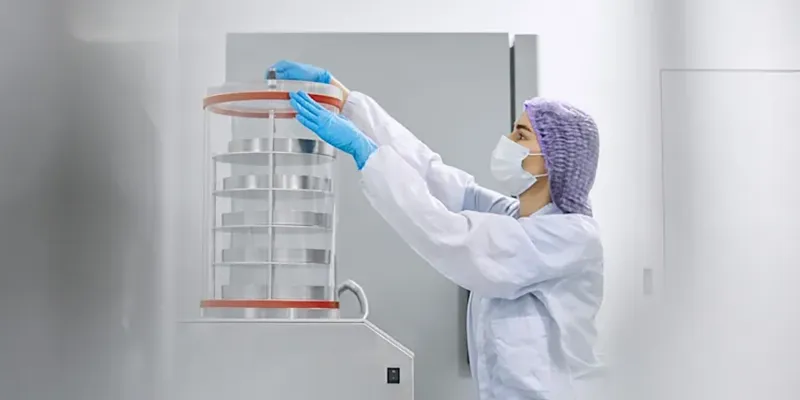
Scientists have demonstrated an automated bioreactor system that produces large numbers of human lung organoids with cellular and structural fidelity comparable to manually grown versions. The stirred-tank method supports efficient airway and alveolar development, confirmed by microscopy and single-cell RNA sequencing, and enables scalable, animal-free models for patient-specific drug testing, including applications in oncology and predictions of radiotherapy response.
Engineering human lung tissue in the lab has always held enormous potential, yet the process has remained constrained by one simple limitation: scale. Generating organoids requires meticulous manual work, which restricts their use in high-throughput drug testing and makes personalized applications difficult to implement. A new study suggests this constraint may finally be easing.
Scaling Lung Organoids with a Bioreactor System
Researchers in Germany have developed a straightforward automated method for producing human lung organoids in bulk using a continuously stirred, oxygenated bioreactor. The advance builds on earlier protocols for generating lung organoids from induced pluripotent stem cells without the need for extracellular matrix gels. By shifting the system into a stirring tank, the team reproduced the same developmental trajectory seen with manual cultures while producing far more usable structures.
“The best result for now — quite simply — is that it works,” said Professor Diana Klein of the University of Duisburg-Essen, first author of the article in Frontiers in Bioengineering and Biotechnology. “This means that, in principle, lung organoids can be produced using an automated process. These complex structures represent the in vivo situation better than conventional cell lines and thus serve as an excellent disease model.”
A Stepwise Workflow from Stem Cells to Structured Lung Organoids
The workflow begins with stem cells expanded in standard culture plates. Once the cells reach sufficient density, they are detached and formed into embryoid bodies in anti-adhesive dishes. These spherical aggregates then receive lung-specific growth factors to initiate differentiation toward airway and alveolar lineages. In the new system, the predifferentiated structures are transferred into a stirred-tank bioreactor equipped with a membrane that delivers oxygen efficiently without generating bubbles, which can disrupt delicate tissues.
Inside the tank, the organoids grow for four weeks under tightly controlled pH, dissolved oxygen, and temperature profiles. Parallel organoids are raised manually to allow direct comparison. Molecular analyses including immunostaining and single-cell RNA sequencing confirm that both approaches generate airway and alveolar structures, with epithelial and mesodermal subsets characteristic of developing human lung tissue. The bioreactor organoids are slightly larger and contain fewer alveolar spheres, a difference the researchers attribute to flow dynamics and nutrient distribution.
“In the next step, the organoids could also be used to test potential therapeutics using high-throughput methods,” said Professor Klein. “Which ones are effective and at what concentration? This could accelerate the development of specific medications for patients. Furthermore, the organoids could also be used to predict patient-specific reactions to radiotherapy or other potential treatments.”
Expanding Clinical Potential through Scalable Models
This ability to scale production reliably, without animal components, is central to future applications in oncology. Freely floating lung organoids generated in large batches could serve as a standardized platform for studying tumor behavior, drug response, and radiation sensitivity. If derived from patient tissue, they could support personalized treatment decisions and enable early testing of experimental compounds.
Limitations remain
“Organoids can’t yet fully recapitulate the lung cellular composition,” said Professor Klein. “Some cells are still missing for the 'big picture', such as infiltrating immune cells and blood vessels. But the organoids themselves show very good bronchiolar and alveolar structures! We obviously don't have blood flow, meaning the conditions are rather static. But for a patient-oriented screening platform, this may not be necessary, if important insights into the cells’ fate during a certain treatment can be obtained. These systems may not yet be as complex as an entire organism, but they are human-based — we have the cells that we also find in patients.”
“There is still a lot of room for optimization,” added Klein. “We need robust and scalable protocols for large-scale organoid production. This requires careful consideration of the bioreactor design, the cell types to be used, and the conditions under which the organoids are cultivated. But we're working on it!”



Comments
No Comments Yet!