Nanotherapy Reprograms Glioblastoma Immunity Through Nose-to-Brain Delivery

ONCOLife |
2 December 2025
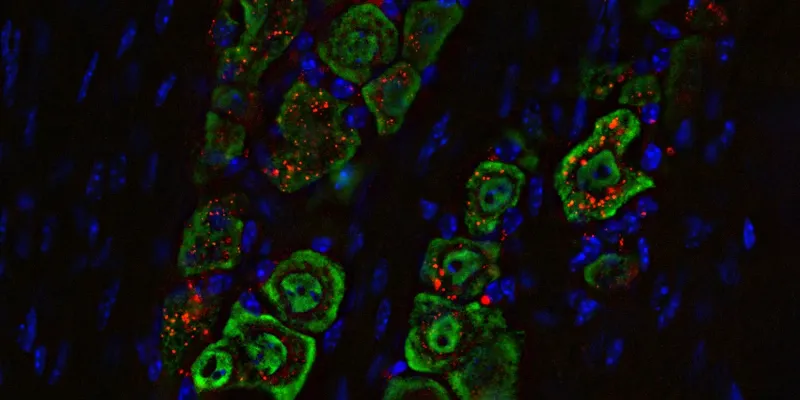
Researchers have developed intranasal spherical nucleic acids that activate the cGAS–STING pathway and reprogram the glioblastoma immune microenvironment. Delivered as nasal drops, the nanotherapy reaches tumors noninvasively, eradicates gliomas, and generates long-term immunity. When paired with checkpoint inhibitors, it abolishes tumor development and overcomes immune resistance. Published in PNAS, the findings redefine how nucleic acid–based immunotherapies might be delivered to anatomically protected cancers.
Glioblastoma remains one of the most intractable cancers. These fast-growing astrocytic tumors progress rapidly, resist most therapies, and use the brain’s immune-privileged environment to evade detection. Even advanced immunotherapies have struggled, largely because delivering potent agents to the tumor often requires highly invasive procedures.
A research team at Washington University School of Medicine, working with collaborators at Northwestern University, now reports a solution that bypasses this barrier entirely. Their approach uses spherical nucleic acids, or SNAs, engineered to activate the cGAS–STING pathway and delivered as nasal drops that travel along neural routes directly into the brain. In mouse models, this noninvasive system triggered a robust immune response, eradicated tumors with minimal dosing, and generated lasting antitumor immunity.
Converting immune-silent tumors into immunotherapy targets
Glioblastomas are classically defined as immune cold. They contain sparse T cell infiltration and abundant immunosuppressive myeloid cells, a combination that leaves the tumor largely invisible to the immune system. Efforts to warm these tumors by activating the STING pathway have shown promise, but available STING agonists degrade quickly and must be injected directly into the tumor.
“We wanted to change this reality and develop a noninvasive treatment that activates the immune response to attack glioblastoma,” said Alexander H. Stegh, professor of Neurosurgery and co-corresponding author of the study. “With this research, we’ve shown that precisely engineered nanostructures, called spherical nucleic acids, can safely and effectively activate powerful immune pathways within the brain. This redefines how cancer immunotherapy can be achieved in otherwise difficult-to-access tumors.”
The cGAS–STING axis is a central sensor of cytosolic DNA, capable of driving interferon production, enhancing T cell recruitment, and reversing myeloid cell–mediated suppression. The authors designed gold-core SNAs decorated with interferon-stimulatory DNA oligonucleotides. These ISD45-SNAs bind cGAS directly, catalyzing endogenous production of cyclic dinucleotides that then activate STING more effectively than clinically tested synthetic agonists.
A nose-to-brain highway for nanomedicine
Intranasal delivery has long been investigated as a way to bypass the blood–brain barrier, but no nanoscale immunotherapy had previously demonstrated the ability to activate tumor immune pathways using this route. The new study provides the first evidence that SNAs can make this journey, arriving intact and functional within the tumor microenvironment.
“This is the first time that it has been shown that we can increase immune cell activation in glioblastoma tumors when we deliver nanoscale therapeutics from the nose to the brain,” said first author Akanksha Mahajan, PhD.
Using near-infrared imaging tags, the team visualized the nanostructures as they traveled along the trigeminal nerve, reaching the tumor with minimal systemic exposure. In treated mice, immune activation was localized to the tumor and surrounding lymphoid structures, avoiding off-target inflammatory effects.
The findings of the research confirms these observations. When delivered intranasally or intratumorally to syngeneic GBM models, ISD45-SNAs “inhibit tumor growth more effectively than CDNs and promote long-term animal subject survival through specific cGAS–STING pathway activation.”
Reprogramming the immune microenvironment
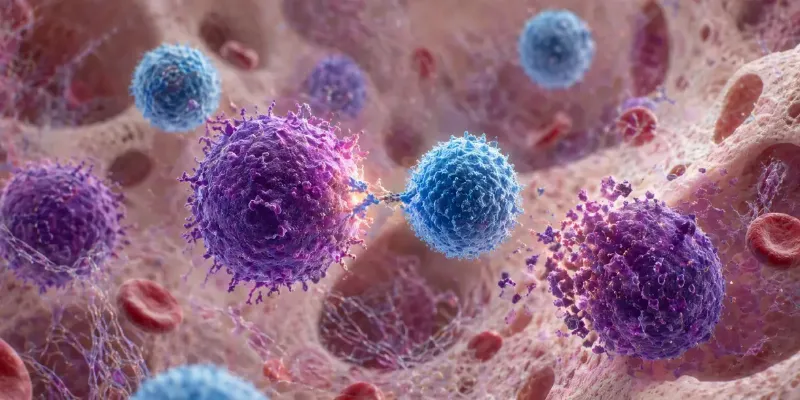
SNAs do more than activate STING; they reshape the tumor’s entire immune landscape. Treated tumors showed an influx of effector T cells and a pronounced shift toward proinflammatory macrophages. With the addition of immune checkpoint inhibitors, the combination abolished glioma development and created durable immunologic memory.
When paired with agents that stimulate T lymphocytes, the nanotherapy “eradicated the tumors with just one or two doses and induced long-term immunity against their recurrence.” These outcomes exceeded those achieved with standard STING agonists and highlight the synergistic potential of this delivery platform.
Toward multi-target, minimally invasive immunotherapy
Stegh was careful to note the limits of single-pathway activation. “Turning on the STING pathway by itself isn’t enough to fight glioblastoma,” he explained, given the tumor’s diverse immune escape mechanisms. His team is already exploring multifunctional SNAs capable of activating several immune circuits simultaneously, potentially allowing clinicians to target multiple checkpoints with a single treatment.
For a disease with no curative therapy and few minimally invasive options, the implications are significant. As Stegh concluded, “This is an approach that offers hope for safer, more effective treatments for glioblastoma and potentially other immune treatment-resistant cancers, and it marks a critical step toward clinical application.”
A platform with wider potential
The nose-to-brain delivery route, combined with the modularity of SNAs, opens opportunities beyond glioblastoma. Other intracranial malignancies, neuroinflammatory diseases, and even neurodegenerative conditions could benefit from nucleic acid therapeutics engineered to navigate neural pathways and modulate specific immune or molecular targets.
For now, the results in glioblastoma offer a rare sense of forward momentum in a field that has been defined by clinical stagnation. The ability to redirect the immune system using a noninvasive formulation, delivered in droplets, signals a shift toward treating brain tumors without surgery or implanted devices.
References
About Author: Hüseyin Kandemir
As a medical journalist with over 20 years of experience, I have served as an Editor and Reporter for various magazines, newspapers, and online broadcasting platforms, consistently demonstrating a strong commitment to excellence in journalism. My specialization includes medical science, digital health, AI for health, data science, and biotechnology.



Comments
No Comments Yet!