Zenocutuzumab Gains NCCN Support as FDA Review Advances in Cholangiocarcinoma
15 April 2026
Key Takeaways
- Partner Therapeutics submitted an FDA sBLA for BIZENGRI in advanced NRG1 fusion-positive cholangiocarcinoma.
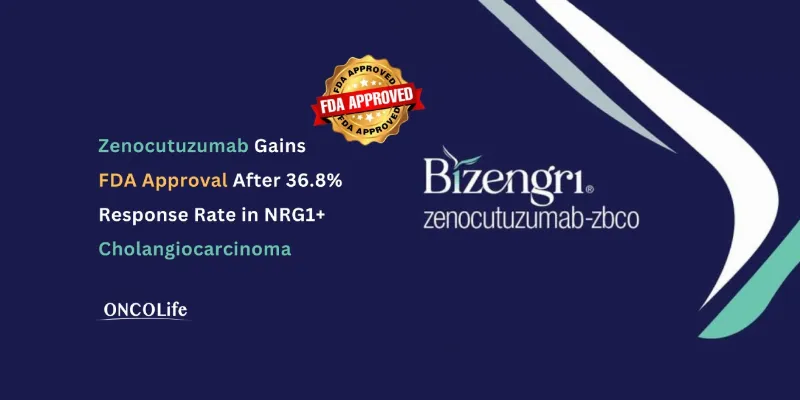
- In the eNRGy cholangiocarcinoma cohort, ORR was 36.8%, with median DOR of 12.9 months.
- Treatment was generally well tolerated, with no discontinuations due to adverse events.
- NCCN added zenocutuzumab-zbco as Category 2A subsequent-line and Category 2B front-line guidance in biliary tract cancer.
Partner Therapeutics has submitted a supplemental Biologics License Application to the U.S. Food and Drug Administration for BIZENGRI, zenocutuzumab-zbco, seeking approval in adults with advanced unresectable or metastatic cholangiocarcinoma harboring an NRG1 gene fusion. If cleared, the drug could become the first targeted therapy specifically approved for this molecularly defined subgroup, an area where treatment options remain extremely limited.
Cholangiocarcinoma is a rare and aggressive bile duct cancer, and outcomes are often poor once the disease becomes advanced. NRG1 fusions are uncommon but clinically important oncogenic drivers. Unlike more familiar fusion events such as ALK, ROS1, RET, or NTRK, NRG1 fusions produce chimeric ligands that activate HER3, drive HER2/HER3 dimerization, and promote downstream proliferative signaling. Zenocutuzumab-zbco is a bispecific antibody designed to interrupt this biology by blocking HER2/HER3 dimerization and NRG1 fusion interaction with HER3.
The filing is supported by data from the eNRGy study, which evaluated zenocutuzumab-zbco across NRG1 fusion-positive cancers, including cholangiocarcinoma. In the cholangiocarcinoma cohort, the agent produced an overall response rate of 36.8% with a 95% confidence interval of 16.3% to 61.6%, and a median duration of response of 12.9 months based on blinded independent central review. The company said treatment was generally well tolerated, with no treatment discontinuations due to adverse events.
"Cholangiocarcinoma remains a devastating disease, particularly in the advanced setting. The identification of NRG1 gene fusions has highlighted an actionable biomarker, and the eNRGy study data suggest that targeted inhibition with zenocutuzumab may represent a meaningful treatment approach for these patients" said Dr. James Cleary, Dana-Farber Cancer Institute.
The development also gained support from the National Comprehensive Cancer Network. Based on the eNRGy data, zenocutuzumab-zbco was added to the NCCN Clinical Practice Guidelines in Oncology for biliary tract cancers as a Category 2A subsequent-line therapy and as a Category 2B option in the front-line setting for NRG1 fusion-positive cholangiocarcinoma. That inclusion is notable in a disease where biomarker-driven strategies are still limited and reinforces the clinical relevance of comprehensive molecular profiling.
"This submission marks an important step in advancing BIZENGRI for patients with NRG1 fusion positive cholangiocarcinoma, a population with limited treatment options, and historically poor outcomes. Cholangiocarcinoma remains a challenging and aggressive disease, and we believe these data support the potential of BIZENGRI to address a critical unmet need for patients whose tumors are driven by NRG1 gene fusions. Tissue‑based RNA testing is essential to identify rare oncogenic fusions such as NRG1 and ensure patients with these actionable alterations are not overlooked," said Pritesh J. Gandhi, Chief Development Officer, Partner Therapeutics.
BIZENGRI already holds accelerated FDA approval for adults with advanced unresectable or metastatic non-small cell lung cancer and pancreatic adenocarcinoma harboring NRG1 gene fusions after prior systemic therapy. As attention grows around rare but actionable alterations, this latest filing also underscores a practical message for clinicians: combined tissue-based DNA and RNA next-generation sequencing remains essential to detect NRG1 fusions and identify patients who may benefit from targeted treatment.

Comments
No Comments Yet!