Painless Blood in the Urine: The Men's Health Warning Sign That Gets Explained Away
26 November 2026
Most men who notice pink or rust-colored urine have a theory ready within seconds. A hard gym session. A long bike ride. Beets. Dehydration. Something they ate. The symptom usually disappears by the next morning, which makes the theory feel correct, and the appointment never gets booked. That pattern is the single most common reason bladder and upper urinary tract cancers are diagnosed later than they need to be.
Painless visible blood in the urine — gross hematuria — deserves a medical evaluation every time, even once, even if it clears. It is not a symptom that earns a wait-and-see approach, particularly in men over 40 and in anyone who has ever smoked.
Why the bladder takes the hit from smoking
Lung cancer dominates the conversation about tobacco, but the urinary tract is one of its other main targets. Aromatic amines and other carcinogens in tobacco smoke are absorbed into the bloodstream, filtered by the kidneys, and then concentrated in urine that may sit in the bladder for hours at a time. The bladder lining — the urothelium — is effectively bathed in those compounds repeatedly, day after day, for decades.
That is why smoking is considered the dominant modifiable risk factor for bladder cancer, and why risk tracks with both how much and how long a person smoked. Two practical points follow. First, quitting lowers risk over time, but it does not reset it to zero quickly; former smokers remain a higher-risk group for years. Second, the same urothelial lining runs from the renal pelvis through the ureters to the bladder and urethra, so disease can appear anywhere along that tract. A clean bladder examination does not automatically clear the kidneys and ureters.
Other risk factors worth knowing
- Occupational exposure to aromatic amines and certain solvents — historically linked to dye, rubber, leather, paint, textile and some metalworking trades, as well as long-term diesel exhaust exposure.
- Chronic bladder irritation, including long-term indwelling catheters and recurrent infections.
- Prior pelvic radiotherapy or specific chemotherapy agents.
- Age and male sex — incidence rises with age and is several times higher in men than women.
- A family history of urothelial cancer, and some inherited cancer syndromes.
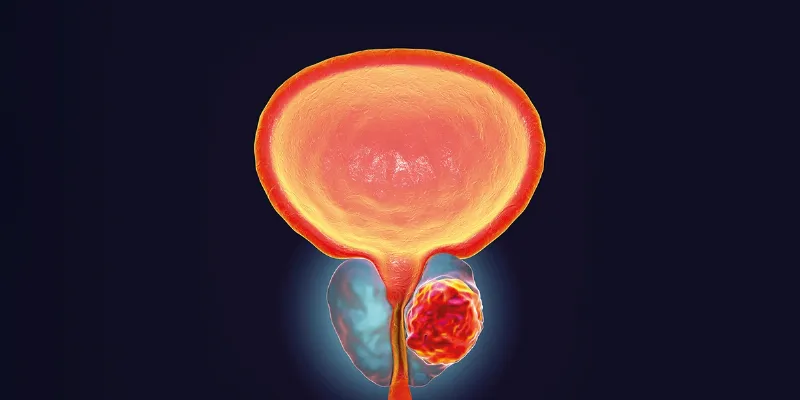
Men also tend to accumulate a convenient alternative explanation for urinary symptoms: an enlarging prostate. Benign prostatic enlargement is genuinely common and genuinely causes weak stream, urgency and nocturia. The trap is assuming it explains bleeding. Benign prostate problems and urothelial cancer can coexist, and a prostate diagnosis is not a reason to skip a hematuria workup.
What an evaluation actually involves
The workup is usually faster and less uncomfortable than men expect, and it is built to answer two questions: is there a structural lesion, and is there a cancer in the lining that imaging cannot see?
- Urinalysis and culture to rule out infection and look at red cell morphology, which can point toward a kidney origin rather than the urinary tract lining.
- Blood tests for kidney function, which also determine whether contrast imaging is suitable.
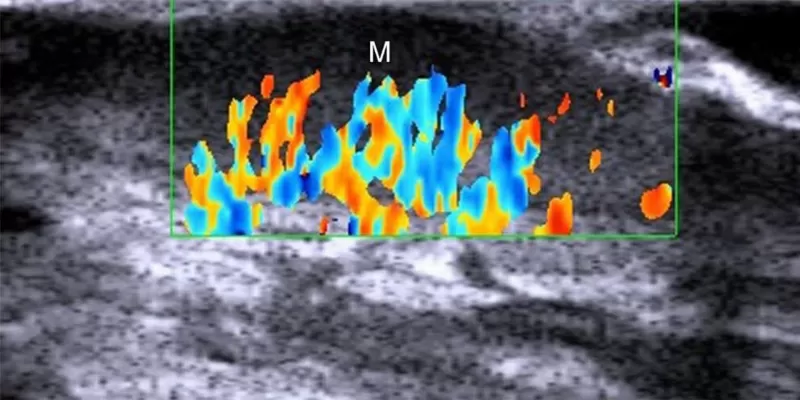
- Cross-sectional imaging, typically CT urography, which maps the kidneys, ureters and bladder in the same study. Ultrasound is gentler and radiation-free but less sensitive for small upper-tract lesions.
- Cystoscopy, a thin flexible camera passed through the urethra under local anesthetic. It is the only reliable way to see flat, carpet-like disease that imaging misses, and it typically takes a few minutes.
- Urine cytology or molecular markers, used selectively rather than as a stand-alone test.
If a tumor is found, the next step is usually a transurethral resection to remove it and establish grade and depth of invasion. That distinction drives everything: non-muscle-invasive disease is generally managed with local treatment inside the bladder plus a long surveillance schedule, while muscle-invasive disease requires a far more involved plan that may combine systemic therapy with surgery or radiation. The trade-off patients feel most is surveillance burden — repeat cystoscopies over years — because recurrence is common even when the original tumor was superficial.
Where specialist, coordinated care matters
Urothelial disease is a multidisciplinary problem rather than a single-specialty one: urology, medical oncology, radiology, pathology and radiation oncology all shape the plan, and decisions about bladder preservation versus removal depend on honest conversations about grade, staging and what a man is willing to live with. That is a strong argument for having the workup and the follow-up run through one coordinated program instead of stitched together across unrelated clinics.
In the UAE, Cleveland Clinic Abu Dhabi is one example of a multispecialty hospital that organizes this kind of care within dedicated institutes and also runs a men's health awareness programme, MENtion It, alongside a medically reviewed health library where patients can read about Urothelial cancer before their first consultation; none of that replaces a personal assessment by a doctor, but arriving informed changes the quality of the conversation.
Risk prediction is getting sharper
Bladder cancer has no population-wide screening test, so detection depends on symptoms being reported and risk factors being recognized. That is exactly where computational risk modeling is being explored — combining smoking history, occupational exposure, routine laboratory results and imaging features to flag who warrants earlier investigation. Reporting on AI models for multi-cancer risk prediction presented at ESMO gives a useful sense of how quickly this field is moving, and why urologists expect triage tools rather than blanket screening to change practice first. The caveat is unchanged: a model can prioritize attention, but a cystoscopy still answers the question.
The prevention side men can control
Quitting smoking is the highest-value action available, and it pays dividends across prostate, heart, lung and metabolic health at the same time. The methods that work are unglamorous: a fixed quit date, nicotine replacement or prescription medication used at adequate doses, and behavioral support rather than willpower alone. Vaping is not a neutral alternative for the urinary tract; it is best treated as a cessation aid, not a destination.
Two other habits reduce exposure: drinking enough water so urine is pale and the bladder empties often, and taking occupational protection seriously if your trade involves solvents, dyes or diesel fumes.
Men also benefit from treating primary care as maintenance rather than crisis management — weight, blood pressure, fasting glucose, testosterone symptoms and vaccination status all belong in the same annual visit. Clinics build capacity for exactly that kind of routine preventive work, and public health guidance on staffing models for vaccination and preventive care clinics shows how much planning sits behind a visit that feels like fifteen quiet minutes to the patient.
A short checklist worth keeping
- Visible blood in the urine, even once, even painless, even if it clears — book an appointment.
- Mention your full smoking history and your job history. Both change how urgently you are investigated.
- Do not accept "it's just the prostate" as an explanation for bleeding without a workup.
- If a non-invasive tumor is removed, attend every surveillance cystoscopy. Recurrence is common and usually treatable when caught early.
- Use the diagnosis as a reason to quit for good — continued smoking is linked to worse outcomes after treatment.
The best outcomes in urothelial disease belong to men who acted on a symptom that looked like nothing. Pink urine that vanishes by morning is still worth a phone call the same week.





Comments
No Comments Yet!