Engineered Oncolytic Virus Reprograms Immunity and Extends Survival in Brain Cancer

20 December 2025
Researchers at Mass General Brigham engineered a retargeted HSV-1 oncolytic virus that selectively infects glioblastoma cells, delivers five immunomodulators, and avoids healthy brain tissue. A single intratumoral dose increased T-cell, natural killer, and myeloid responses, reduced T-cell exhaustion, enabled PET tracking, and significantly prolonged survival, highlighting a multipronged viroimmunotherapy strategy for glioblastoma treatment.
Glioblastoma remains one of the most lethal solid tumors in oncology. Despite maximal surgery, radiotherapy, and chemotherapy, median survival is still measured in months. Over the past decade, immunotherapies that transformed outcomes in melanoma and lung cancer have repeatedly failed in this disease, largely because glioblastoma constructs an exceptionally hostile tumor microenvironment that suppresses nearly every arm of the immune response.
Against this backdrop, researchers from Mass General Brigham have developed a next generation oncolytic virus designed to do more than simply infect and kill tumor cells. In preclinical models, the engineered virus simultaneously dismantles immune suppression, recruits multiple immune cell populations, and improves survival after a single intratumoral dose. The work, published in Nature Cancer, offers a detailed blueprint for how viroimmunotherapy might finally gain traction in brain tumors.
"We engineered a safe and traceable oncolytic virus with strong cytotoxic and immunostimulatory activities for glioblastoma immunotherapy,” said Francisco J. Quintana, PhD, of the Mass General Brigham Department of Neurology and senior author of the study. “This platform offers a multipronged approach, precise tumor targeting, local delivery of immunotherapeutic payloads, and a built-in safety system to protect normal brain cells.”
Precision engineering for a resistant disease
Oncolytic viruses have been tested in glioblastoma for more than twenty years, yet most candidates have delivered modest benefit. Many failed to spread efficiently within tumors, others lacked meaningful immunologic impact, and several raised safety concerns related to infection of healthy brain tissue.
The new platform is built on herpes simplex virus type 1, specifically a highly cytopathic MacIntyre strain that was extensively reengineered. The researchers introduced mutations to enhance viral spread and oncolytic activity while limiting genetic drift. Crucially, they added multiple safety layers to prevent replication in neurons and healthy central nervous system cells, including microRNA target cassettes that selectively attenuate viral replication outside tumor tissue.
To ensure tumor specificity, the viral envelope protein gD was modified to recognize glioblastoma associated surface markers. By using EGFR specific or integrin specific binders, the virus preferentially infects malignant cells while sparing surrounding brain tissue. The result is a retargeted virus designed for precision delivery in one of the most sensitive organs in the body.
Remodeling the tumor microenvironment
What truly distinguishes this approach is its multipronged immune payload. Glioblastoma cells secrete a dense network of suppressive signals that exhaust T cells, exclude natural killer cells, and skew myeloid populations toward tumor support. Rather than addressing these pathways individually, the investigators engineered the virus to locally express five distinct immunomodulators.
These include IL 12 to activate cytotoxic immune responses, anti PD1 to counteract checkpoint mediated T cell exhaustion, a bispecific T cell engager to enhance tumor cell killing, 15 hydroxyprostaglandin dehydrogenase to disrupt prostaglandin driven immune suppression, and anti TREM2 to reprogram suppressive myeloid cells. Delivered directly into the tumor, these agents act in concert to reshape the immune landscape without exposing the rest of the body to systemic toxicity.
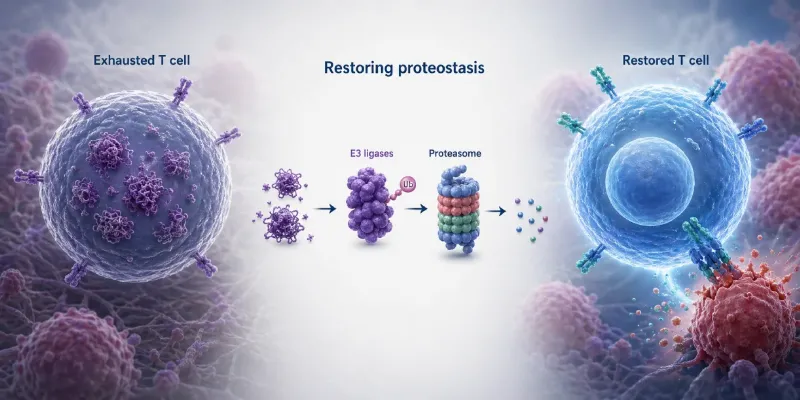
In preclinical glioblastoma models, a single intratumoral injection led to robust infiltration of tumor fighting T cells, activation of natural killer cells, and favorable shifts in myeloid cell populations. Markers of T cell exhaustion were reduced, and treated animals survived significantly longer than untreated controls.
Built in visibility and safety
Beyond efficacy, the platform incorporates features aimed at clinical translation. The virus contains genetic “off switches” that block spread to healthy brain cells, addressing long standing safety concerns around HSV based therapies. In addition, the team inserted a reporter gene that allows viral distribution to be visualized by PET imaging. This traceability offers clinicians a noninvasive way to monitor viral persistence and tumor coverage in real time, a capability rarely available with immunotherapies.
A platform with broader implications
While the findings remain preclinical, they point toward a broader shift in how immunotherapy for brain tumors may be designed. Rather than relying on single mechanism interventions, the study demonstrates the feasibility of deploying coordinated immune reprogramming directly inside the tumor microenvironment. If these results translate clinically, engineered oncolytic viruses could emerge not only as cytotoxic agents, but as programmable immune systems delivered precisely where they are most needed.










Comments
No Comments Yet!