TRBC2-Specific ADC Shows Robust Efficacy in T-Cell Lymphomas and Leukemias
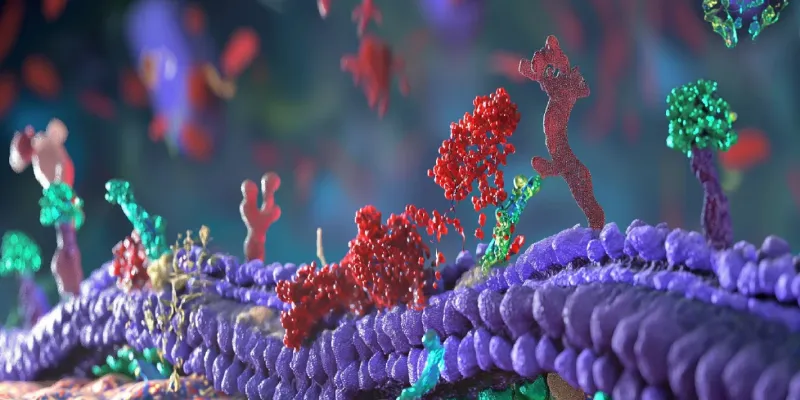
Researchers at the Johns Hopkins KCC have developed a TRBC2-targeted antibody-drug conjugate for T-cell lymphomas and leukemias, addressing half of patients previously lacking precision options. The therapy selectively eradicated TRBC2-positive tumors, preserved immune-critical T cells, and achieved durable 150-day cancer clearance in preclinical models with minimal toxicity.
In T-cell lymphomas and leukemias, therapeutic progress has long lagged behind advances seen in B-cell malignancies. These cancers are biologically complex, relatively rare, and uniquely constrained by immunology. Eliminating too many T cells, even in the process of attacking cancer, can leave patients unable to fight infections. As a result, adults with relapsed T-cell cancers still face five-year survival rates ranging from just 7% to 38%.
Researchers at the Johns Hopkins Kimmel Cancer Center have now taken a decisive step toward changing that trajectory. In a study published in Nature Cancer, the team reports the development of a targeted antibody-drug conjugate that selectively attacks TRBC2-positive T-cell cancers, completing a long-sought precision strategy that now covers the great majority of patients with these diseases.
Why T-Cell Cancers Are Different
The central challenge in treating T-cell malignancies lies in the essential role of T cells themselves. Unlike B-cell depletion, which patients can often tolerate with immunoglobulin replacement, widespread T-cell loss is frequently incompatible with survival.
“There is a challenging situation,” says senior author Dr. Suman Paul, assistant professor of oncology, “because unlike B-cell therapies, where eliminating both cancerous and healthy B cells is tolerable, therapies targeting T cells must preserve enough normal T cells for patients to survive infections. The tricky part is that if the drug kills both the T-cell lymphoma and the normal T cells, then it’s very hard for that person to survive. We have to be mindful that it has to get rid of the cancer, but it cannot completely get rid of the normal T cells.”
This constraint has historically limited drug development in the field and contributed to lower pharmaceutical investment compared with B-cell cancers.
Exploiting a Biological Divide
A key biological insight has opened a path forward. Mature T cells express one of two mutually exclusive variants of the T-cell receptor beta constant region, known as TRBC1 and TRBC2. In healthy individuals, approximately 40% of T cells are TRBC1-positive and about 60% are TRBC2-positive. T-cell cancers, however, are clonal, meaning that each tumor expresses only one of these two variants.
This creates an opportunity for selective targeting. By designing therapies that recognize only the TRBC variant expressed by the cancer, clinicians can eliminate malignant cells while preserving a substantial fraction of normal T cells, roughly 40% to 60%, enough to maintain immune function.
Building a TRBC2-Specific Weapon
In 2024, the Johns Hopkins team demonstrated this principle preclinically by developing the first therapeutic antibody targeting TRBC1-positive T-cell cancers. Until now, however, no equivalent approach existed for patients whose tumors expressed TRBC2, leaving nearly half of all cases without a precision option.

To close that gap, the researchers turned to phage display technology, using a large antibody library to search for candidates capable of distinguishing TRBC2 from the closely related TRBC1 protein. Through this process, they identified a new antibody, JX1.1, that binds exclusively to TRBC2.
“Our antibody was developed using SLISY, a next-generation sequencing-based platform for rapid identification of antibody candidates from a phage library,” says Dr. Ken Kinzler, Barry Family Professor in Oncology, and director of the Ludwig Center.
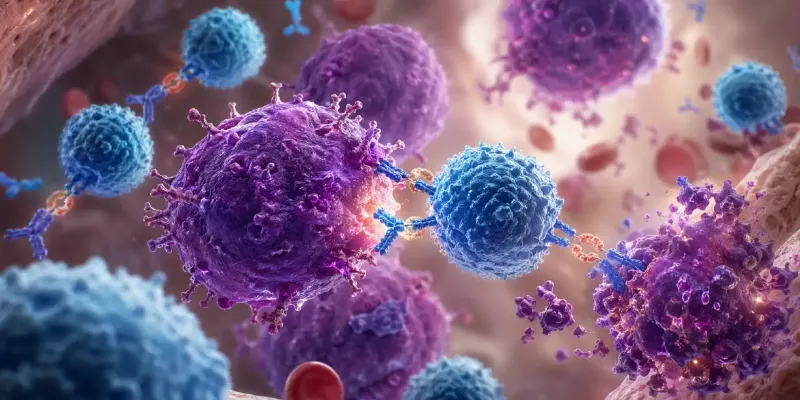
The team then linked JX1.1 to a potent DNA-damaging payload, pyrrolobenzodiazepine, creating an antibody-drug conjugate designed to deliver its cytotoxic effect directly into TRBC2-positive cancer cells.
Striking Results in Preclinical Models
In laboratory experiments and animal models, the TRBC2-targeting ADC showed a high degree of specificity. It clearly distinguished TRBC2-positive cancer cells from TRBC1-positive normal T cells, selectively killing malignant cells while sparing a large proportion of healthy immune cells.
The biological impact was striking. In mouse models of TRBC2-positive T-cell cancer, treatment with the JX1.1-based ADC led to robust tumor regression with minimal toxicity. All treated animals showed sustained elimination of detectable cancer throughout the entire 150-day follow-up period, an outcome rarely seen in preclinical studies of aggressive T-cell malignancies.
A Matched Precision Strategy
With both TRBC1- and TRBC2-directed antibodies now available, the researchers describe a complete precision framework for T-cell cancers.
“The development of TRBC1 and TRBC2 antibodies together now provides a conceptual ‘matched set’ of precision tools for the great majority of patients with T-cell cancers,” Dr. Paul says.
Importantly, the TRBC2-targeting ADC is envisioned as an off-the-shelf therapy, rather than a personalized cellular product, which could simplify manufacturing and broaden access if the approach succeeds in clinical trials.



Comments
No Comments Yet!