Tucatinib Combination Cuts Progression Risk by 36% in HER2+ Metastatic Breast Cancer
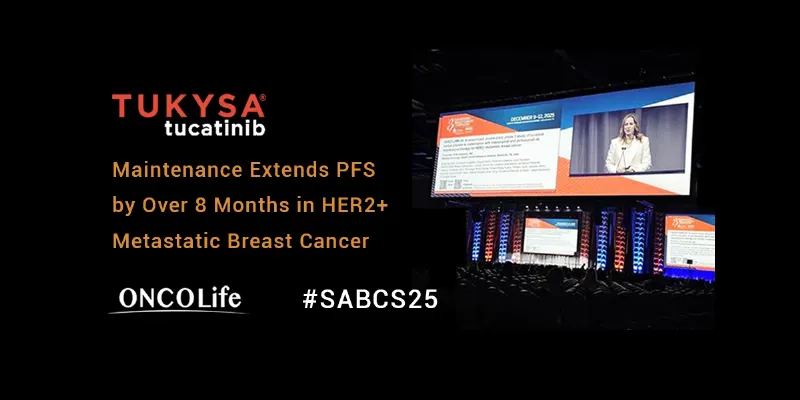
The results from the Phase 3 HER2CLIMB-05 study, demonstrated that tucatinib added to trastuzumab and pertuzumab in first-line maintenance significantly prolonged progression-free survival in HER2-positive metastatic breast cancer. The regimen extended median PFS to 24.9 months versus 16.3 months and reduced the risk of progression or death by 35.9%. Benefits were consistent across subgroups, with manageable toxicity, positioning this approach as a promising chemotherapy-free maintenance strategy.
Pfizer has reported pivotal findings from the Phase 3 HER2CLIMB-05 study, showing that adding the oral HER2-selective tyrosine kinase inhibitor tucatinib (TUKYSA) to standard first-line maintenance therapy significantly prolongs disease control in patients with HER2-positive metastatic breast cancer. The results, published in the Journal of Clinical Oncology and presented at the 48th San Antonio Breast Cancer Symposium, suggest a potential shift toward a chemotherapy-free maintenance approach in a setting where treatment options have remained largely unchanged for more than a decade.
The trial evaluated tucatinib in combination with trastuzumab and pertuzumab following taxane-based induction therapy. According to the primary analysis, this regimen reduced the risk of disease progression or death by 35.9 percent compared with trastuzumab and pertuzumab alone. The hazard ratio of 0.641 (95% CI, 0.514–0.799; p<0.0001) was consistent across all prespecified subgroups, including hormone receptor status and the presence or history of brain metastases.
Median progression-free survival improved from 16.3 months in the control arm to 24.9 months with the tucatinib regimen, extending disease control by 8.6 months. Overall survival data remain immature, although early trends favor tucatinib.
“Most patients with HER2-positive metastatic breast cancer face disease progression within two years of starting first-line treatment, often requiring a transition to chemotherapy,” said Dr. Erika Hamilton, principal investigator of HER2CLIMB-05 and Director of Breast Cancer Research for SCRI. “These results demonstrate that adding tucatinib to first-line maintenance therapy extends the time patients live without their disease progressing, while maintaining a manageable safety profile, suggesting a promising new potential approach that could advance the current standard of care for HER2-positive disease.”

The safety findings aligned with the known profiles of the individual agents. Higher rates of asymptomatic Grade 3 or higher transaminase elevations were observed in the tucatinib arm, but these were generally reversible with dose adjustments or discontinuation. The most frequently reported adverse events included diarrhea, hepatic events, and nausea.
“TUKYSA has become a trusted standard of care for patients with later-line HER2-positive metastatic breast cancer, and the results from HER2CLIMB-05 support its potential use as part of a chemotherapy-free, front-line maintenance strategy,” said Jeff Legos, Chief Oncology Officer at Pfizer. “At Pfizer, we are committed to advancing treatment options that meaningfully improve the lives of people with metastatic breast cancer, and we are proud to share these promising results for patients and their families.”
Tucatinib is not yet approved for first-line use. Pfizer plans to discuss the HER2CLIMB-05 results with regulatory authorities. Since 2020, tucatinib combined with trastuzumab and capecitabine has been an established standard in the third-line setting for HER2-positive metastatic breast cancer, including for patients with active or stable brain metastases.

HER2-positive metastatic breast cancer accounts for 15 to 20 percent of breast cancer cases and is associated with poor prognosis. Five-year survival remains approximately 41 to 47 percent depending on hormone receptor status. Maintenance treatment strategies have seen limited innovation since 2012, making the new findings particularly notable.
HER2CLIMB-05 randomized 654 patients who had completed induction therapy with trastuzumab, pertuzumab, and a taxane without progression. Patients received tucatinib plus trastuzumab and pertuzumab or placebo plus trastuzumab and pertuzumab. The primary endpoint was investigator-assessed progression-free survival with overall survival as a key secondary endpoint.










Comments
No Comments Yet!