Less Toxic, More Effective: RW Evidence Supports Reduced Immunotherapy Dose in Melanoma

Clinical Trials |
ONCOLife |
14 December 2025
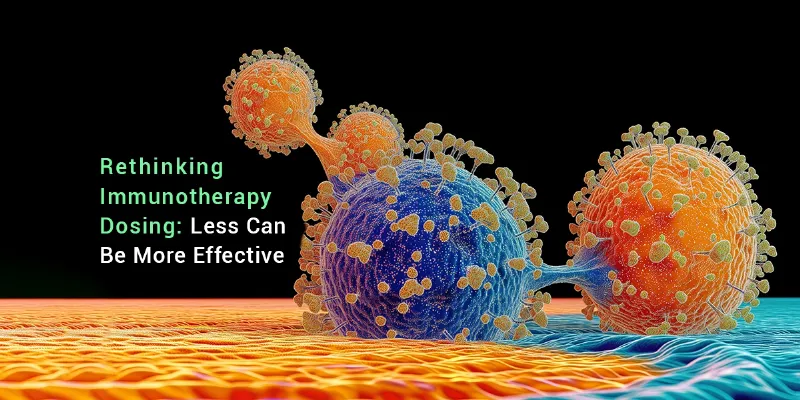
Real-world data from nearly 400 patients with advanced, unresectable melanoma show that a flipped, lower-dose ipilimumab regimen increased objective response rates from 37% to 49%, tripled median progression-free survival from 3 to 9 months, and extended overall survival from 14 to 42 months, while reducing severe immune-related toxicity from 51% to 31%.
For more than a decade, immune checkpoint inhibitors have reshaped the outlook for patients with advanced melanoma. Drugs such as nivolumab and ipilimumab, once considered last-line options, are now foundational therapies capable of producing durable responses and long-term survival in a subset of patients. Yet these benefits have come at a cost: high rates of immune-related toxicity and escalating pressure on healthcare budgets.
New real-world evidence from Karolinska Institutet suggests that a simple adjustment, lowering the dose of one component of combination immunotherapy, may simultaneously improve efficacy, safety, and sustainability.
Researchers reporting this week in the Journal of the National Cancer Institute analyzed outcomes from nearly 400 patients with advanced, unresectable malignant melanoma treated at Swedish oncology centers. All patients received combination immunotherapy with nivolumab and ipilimumab, but under two different dosing strategies. One followed the long-established regimen approved in 2016, nivolumab 1 mg/kg plus ipilimumab 3 mg/kg. The other used a flipped and lower-toxicity protocol, nivolumab 3 mg/kg plus ipilimumab 1 mg/kg, a regimen explored previously in the CheckMate 511 trial but never formally approved for melanoma.
The results challenge long-held assumptions about dose intensity in immuno-oncology.
“The results are highly interesting in oncology, as we show that a lower dose of an immunotherapy drug, in addition to causing significantly fewer side effects, actually gives better results against tumours and longer survival,” says Dr. Hildur Helgadottir, a researcher at the Department of Oncology-Pathology at Karolinska Institutet, who led the study.
A Counterintuitive Signal
Malignant melanoma remains the deadliest form of skin cancer, particularly once it progresses beyond the reach of surgery. Immunotherapy has transformed this landscape, but combination regimens are notorious for severe immune-related adverse events affecting the skin, gut, liver, and endocrine organs. In routine practice, toxicity often forces dose delays, early discontinuation, or prolonged steroid use, all of which may blunt antitumor benefit.
“In Sweden, we have greater freedom to choose doses for patients, while in many other countries, due to reimbursement policies, they are restricted by the doses approved by the drug authorities,” says Dr. Helgadottir.
That flexibility created a natural experiment. When outcomes were compared, 49% of patients receiving the lower ipilimumab dose achieved an objective response, versus 37% in the standard-dose group. Progression-free survival tripled, rising from a median of three months to nine months. Overall survival showed an even more striking difference, increasing from 14 months to 42 months.
Equally important, toxicity fell sharply. Serious immune-related side effects were reported in 31% of patients treated with the lower dose, compared with 51% among those receiving the traditional regimen.
Real-World Data, Real-World Impact
The observational findings closely mirror the abstracted data from the Swedish cohort study evaluating the flipped regimen NIVO3+IPI1 in routine clinical practice. In that analysis, the objective response rate reached 48.8% with the flipped dose, compared with 36.9% under the standard approach, a statistically significant improvement. Adjusted hazard ratios favored the lower-dose ipilimumab strategy for both progression-free survival and overall survival, with reductions in the risk of progression and death of 33% and 41%, respectively. Grade 3 to 5 immune-related adverse events were nearly halved.
After adjustment for age and tumor stage, the survival advantage remained robust, suggesting that patient selection alone does not explain the findings.
"The new immunotherapies are very valuable and effective, but at the same time they can cause serious side effects that are sometimes life-threatening or chronic. Our results suggest that this lower dosage may enable more patients to continue the treatment for a longer time, which is likely to contribute to the improved results and longer survival," says Hildur Helgadottir.
The study cannot definitively establish causality, but it offers a biologically plausible explanation. Severe toxicity often leads to early discontinuation of therapy. A better-tolerated regimen may allow patients to receive more treatment cycles, maintaining immune pressure on the tumor over time.
Implications Beyond Melanoma
If confirmed in prospective trials, these findings could have implications far beyond melanoma. Combination checkpoint inhibition is being explored across multiple tumor types, often with similar toxicity challenges. The assumption that higher doses necessarily drive stronger immune responses is increasingly being questioned, particularly as clinicians gain more insight into immune exhaustion, tolerability, and treatment adherence.
References
About Author: Hüseyin Kandemir
As a medical journalist with over 20 years of experience, I have served as an Editor and Reporter for various magazines, newspapers, and online broadcasting platforms, consistently demonstrating a strong commitment to excellence in journalism. My specialization includes medical science, digital health, AI for health, data science, and biotechnology.



Comments
No Comments Yet!