AACR26 Data Show Multi-Biomarker MCED Approach Improves Early Cancer Detection
17 April 2026
Key Takeaways
- At AACR 2026, Abbott presented data on Cancerguard, a multi-biomarker blood-based MCED test that combines methylation and protein signals to improve cancer detection.
- In 3,163 samples, 47.1% of positive calls were methylation-only, 7.4% protein-only, and 45.5% dual-signal.
- False positives were 2.6%, and none were positive for both biomarker classes.
- DETECT-A follow-up showed all stage I-II cases remained alive and cancer-free after about four years.
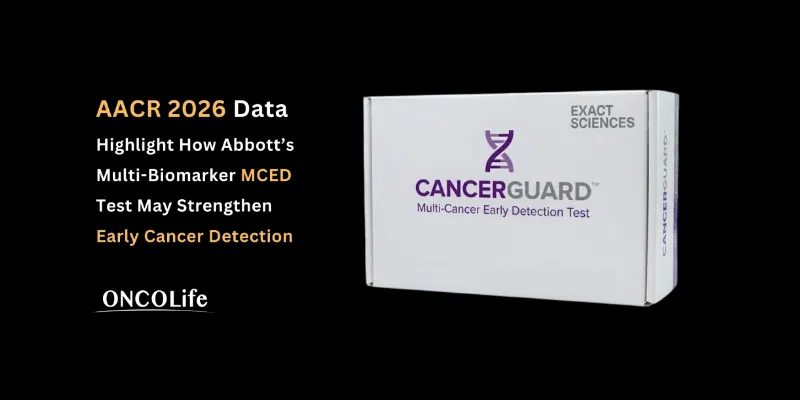
New findings presented at the American Association for Cancer Research (AACR) Annual Meeting 2026 offer a closer look at how Abbott’s commercially available Cancerguard® multi-cancer early detection, or MCED, test is trying to improve the detection of early-stage cancers by combining two distinct blood-based biomarker classes: methylation and proteins.
The data, drawn from a prospectively collected case-control study, suggest that this dual-biomarker design may capture cancers that could be missed if only one signal were used. For clinicians watching the MCED field mature, the findings add mechanistic support to a broader question: whether combining orthogonal biomarkers can improve sensitivity without an unacceptable loss of specificity.
Study Design and Classifier Performance
According to the abstract, the refined MP V2 classifier was developed using samples from 3,163 participants, including 729 patients with cancer and 2,434 without cancer. The model was trained to maintain a target specificity of at least 97.0%, while improving early-stage sensitivity. In the intended-use cohort, excluding breast and prostate cancers, 378 of 590 cancer cases generated a positive MP V2 call.
Independent Contributions of Methylation and Protein Signals
What stands out is how independently the two biomarker classes contributed to detection. Of all positive calls, 47.1% were driven by methylation alone, 7.4% by protein alone, and 45.5% by both together. In stage I and II disease, methylation-only signals accounted for most positive results, 64.6% combined, while protein-only calls still contributed 11.1%, suggesting that proteins added incremental value even in earlier disease. Dual-positive calls became more common in later-stage disease, reaching 65.7% in stage IV cancers.
Low False-Positive Rate Supports Specificity
Just as important, false-positive results remained limited. Among 2,434 non-cancer participants, 64 cases, or 2.6%, produced a false-positive call, and none were positive for both biomarker classes. All false positives came from either methylation-only or protein-only signals, a finding Abbott says may support a more streamlined diagnostic follow-up pathway.
"We designed Cancerguard as the first-of-its-kind multi-biomarker test because no one signal tells the whole story," said Dr. Tom Beer, chief medical officer, multi-cancer early detection, Abbott's cancer diagnostics business. “By combining biomarkers, we can detect cancer earlier, when it matters most.”
The AACR meeting will also spotlight longer-term evidence for the clinical relevance of MCED screening. The AACR Cancer Prevention Research Award for Outstanding Journal Article will recognize a 2024 Cancer Prevention Research publication reporting multi-year outcomes from the DETECT-A study, described as the first large prospective interventional trial of a blood-based MCED test in a real-world setting.
That study enrolled more than 10,000 women with no history of cancer and evaluated whether a blood test, used alongside standard screening, could identify cancers before symptoms emerged. The earlier CancerSEEK assay, the precursor to Cancerguard, detected nine cancer types, including several with no routine screening options. After a median follow-up of about four years, all patients treated for stage I or II cancers were reported to be alive and cancer-free.
"Long-term follow-up provides critical insight into how multi-cancer early detection can shape the future of cancer screening," said Dr. Beer. “With nearly 70 percent of cancers occurring in types without recommended screening, these findings highlight the potential for MCED to increase early detection and improve outcomes.”
About the Cancerguard test
Cancerguard is a laboratory-developed test (LDT) designed to detect multiple cancers, including the most aggressive cancers, in early stages from a simple blood draw. It integrates two classes of biomarkers to enable broader detection and follows a streamlined, imaging-based diagnostic pathway to help reduce unnecessary follow-up procedures. Developed with high specificity to minimize false positives, the test helps detect a wide range of cancers, including those that lack guideline-recommended screening options. The Cancerguard test has not been cleared or approved by the U.S. Food and Drug Administration or any other regulatory authority.










Comments
No Comments Yet!