ALK Mutation Emerges as a Potential Biomarker for Pan-Cancer Immunotherapy Benefit
4 May 2026
Key Takeaways
- A pan-cancer analysis of 2,930 patients across 11 tumor types found that ALK mutation was associated with significantly improved survival among patients treated with immune checkpoint inhibitors.
- Patients with ALK-mutant tumors had a 31% lower risk of death, with a hazard ratio of 0.69.
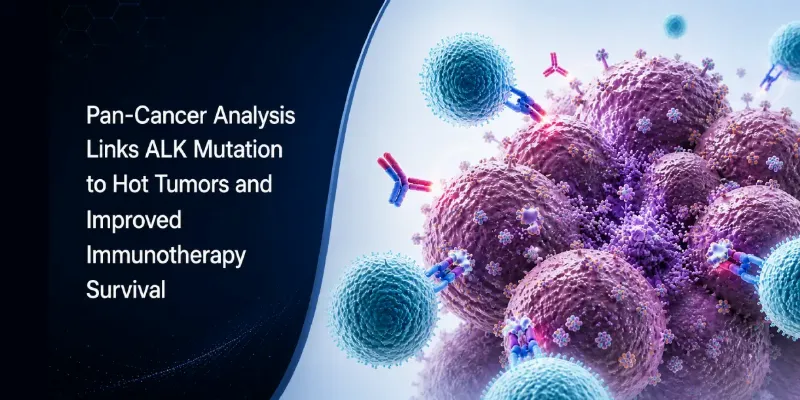
- Multi-omics data suggest these tumors may be immunologically “hot,” with higher TMB, neoantigen abundance, immune-cell infiltration, and checkpoint expression.
For years, ALK has been viewed mainly through the lens of targeted therapy, especially in lung cancer. But a new pan-cancer analysis suggests that ALK mutation may also carry a different kind of signal: it may identify tumors with stronger immune activity and better outcomes after immune checkpoint blockade. The findings, published in Genes & Diseases, point to ALK mutation as a potential predictive biomarker across multiple tumor types, although prospective validation remains essential.
The study, conducted by researchers from Fujian Medical University and Sun Yat-Sen University, analyzed clinical and molecular data to explore the relationship between ALK mutation, tumor immunogenicity, and response to immune checkpoint inhibitors. The clinical dataset included 2,930 patients with 11 tumor types who had received immune checkpoint blockade.
ALK Mutation Linked to Longer Survival
The key finding was clear. Patients whose tumors carried ALK mutations had significantly better overall survival after immunotherapy. In the pooled analysis, ALK mutation was associated with a hazard ratio for death of 0.69, with a 95% confidence interval of 0.57 to 0.83 and a p value below 0.001. In practical terms, this corresponds to a 31% lower risk of death compared with patients without ALK mutations.
Why ALK Mutation Differs From ALK Rearrangement
That result is important because ALK biology has had a complicated relationship with immunotherapy. In ALK-rearranged lung cancer, previous studies have suggested limited benefit from immune checkpoint inhibitors used as single agents. The new analysis makes a critical distinction: ALK rearrangement and ALK mutation are not necessarily the same biological context. The authors argue that ALK-mutant tumors may carry immune features that make them more responsive to checkpoint blockade.
To translate the clinical findings into a more practical tool, the researchers developed and validated a nomogram designed to estimate 12-month and 24-month survival probabilities after the start of immunotherapy. Such tools are not substitutes for clinical judgment, but they may help refine risk stratification if validated in prospective cohorts.
Higher Tumor Mutation Burden May Explain Stronger Immunogenicity
The biological analysis provides a plausible explanation for the survival signal. ALK-mutant tumors showed evidence of stronger intrinsic immunogenicity, including higher tumor mutation burden and increased silent and non-silent mutation rates. Tumors with more mutations are more likely to generate neoantigens, which can make them more visible to the immune system.
ALK-Mutant Tumors Show a More Active Immune Microenvironment
The extrinsic immune landscape also appeared more active. Compared with ALK wild-type tumors, ALK-mutant tumors showed greater immune-cell infiltration, higher neoantigen abundance, and greater diversity in T-cell and B-cell receptor repertoires. These features suggest a tumor microenvironment that is already more engaged with the immune system.
The study also found higher mRNA expression of major immune checkpoints and immune-related mediators in ALK-mutant tumors. These included CTLA-4, PD-1, and PD-L1, as well as immune stimulators and chemokines. This may sound paradoxical, since checkpoint molecules can suppress immune activity. But in immunotherapy research, their presence often reflects an ongoing immune response that tumors are trying to restrain. Blocking those checkpoints may therefore restore or amplify antitumor immunity.
Taken together, the findings support the authors’ conclusion that ALK-mutant tumors may behave as immunologically “hot” tumors. That designation matters. “Cold” tumors often lack immune-cell infiltration and respond poorly to immunotherapy. “Hot” tumors are more likely to contain immune cells, inflammatory signaling, and antigenic targets that checkpoint inhibitors can exploit.
The distinction between ALK mutation and ALK rearrangement also needs careful communication. The findings should not be interpreted as evidence that all ALK-altered tumors respond well to immunotherapy. Rather, they suggest that ALK mutation may define a biologically distinct subset with enhanced tumor immunity.
ALK Mutation Could Strengthen Future Immunotherapy Biomarker Models
ALK mutation could become part of a broader biomarker framework alongside tumor mutation burden, microsatellite instability, PD-L1 expression, tumor-infiltrating lymphocytes, and other genomic or immune features. Its greatest value may lie not as a single marker, but as one component of a more integrated model for predicting immunotherapy benefit.
The next step will be prospective validation in defined tumor cohorts and treatment settings. New studies also need to explore whether ALK-mutant tumors benefit from specific immunotherapy combinations, including dual checkpoint blockade or combinations with targeted therapies, chemotherapy, or other immune-modulating agents.
If confirmed, the implications could be clinically meaningful. ALK mutation screening may help identify patients more likely to benefit from immune checkpoint blockade across cancer types. It may also sharpen the design of future immunotherapy trials by selecting patients whose tumors are already primed for immune attack.
Still, the study should be interpreted with caution. This was a comprehensive bioinformatic and clinical analysis, not a prospective randomized trial designed to assign treatment based on ALK mutation status. Pan-cancer analyses can reveal important patterns, but tumor type, prior therapy, co-mutations, disease burden, and checkpoint inhibitor regimen may all influence outcomes.




Comments
No Comments Yet!