Magnetic Nanoparticle-Guided Hyperthermia Opens a New Path for Advanced Solid Tumors
23 March 2026
Mayo Clinic has launched the first U.S. clinical research program using magnetic nanoparticle-mediated hyperthermia for metastatic solid tumors. The investigational system uses intravenously delivered iron oxide nanoparticles activated by electromagnetic induction to heat tumors up to 50°C. Early data from 30 patients showed no technology-related severe toxicity, while preclinical findings suggest potential immune-modulating and antitumor effects.
For more than a century, oncologists have known that cancer cells can be unusually vulnerable to heat. The problem has never been the concept. It has been control. Traditional hyperthermia systems have struggled to deliver consistent, tumor-focused heating deep inside the body without harming surrounding tissue. Now Mayo Clinic is testing a new approach that could revive the field, this time with nanoparticles, electromagnetic induction, and a far more precise engineering strategy.
Mayo Clinic installed the first magnetic nanoparticle-mediated hyperthermia system for cancer research in the United States, in collaboration with New Phase. The platform is now being evaluated in patients with metastatic solid tumors, excluding brain tumors, many of whom have already exhausted multiple lines of systemic therapy, radiotherapy, or other advanced options.
"We have known for more than a century that temperature is the Achilles' heel of cancer, but conventional hyperthermia has limitations and is not widely available," says Dr. Scott Lester, a radiation oncologist at Mayo Clinic Comprehensive Cancer Center. “The hyperthermia technology we've installed is still investigational but may enable us to harness heat in a novel way for advanced cancers, and we're grateful to be the first to use it in our research.”
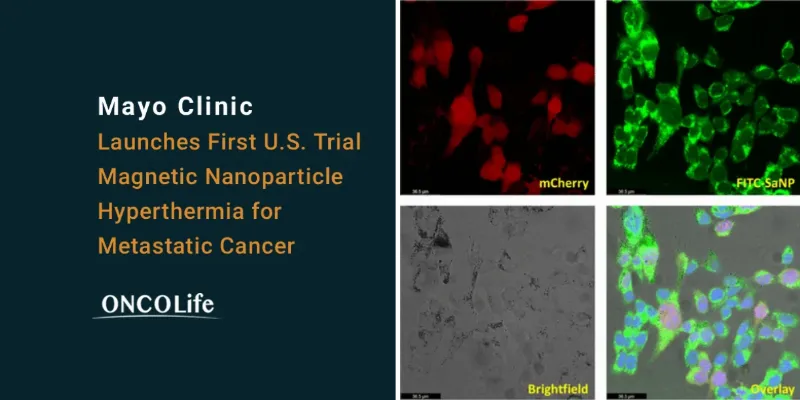
The treatment uses proprietary SARAH nanoparticles, or SaNPs, which are magnetic multicore iron oxide particles administered intravenously. After infusion, the particles accumulate in tumors and are then activated by an electromagnetic induction system. The resulting heat can raise the local tumor temperature to about 50°C, a threshold intended to damage cancer cells while sparing normal tissue.

Induction cooktops heat only cookware that can respond to the electromagnetic field. Here, the tumor becomes the responsive target because it contains the nanoparticles. When alternating magnetic fields pulse through the treatment system, heat is generated selectively within the tumor. A special nanoparticle coating is designed to prevent temperatures from rising above 50°C, while cooling blankets and close monitoring help protect the patient from systemic overheating.
New Phase says no toxicity or severe side effects related to the technology have been observed in 30 patients treated to date. New Phase says no technology-related toxicity or severe side effects have been observed in 30 patients treated to date. These data helped support the FDA’s decision to allow an accelerated initial clinical step in the United States.
The company aims to use the platform to stabilize stage IV solid tumors and potentially help transform late-stage cancer into a more manageable chronic condition. So far, its clinical focus has included ovarian, cervical, and liver cancers.
What makes the approach especially interesting is that the biology may be doing more than passively tolerating the particles. A preclinical study on macrophage responses to SaNPs offers a more detailed look at what happens after the nanoparticles enter the body. In murine RAW264.7 macrophages, the particles were internalized and localized within lysosomes, while maintaining structural integrity and avoiding intracellular toxic degradation. Over time, they were cleared. That finding matters, because macrophages are central to nanoparticle handling, immune signaling, and safety assessment.
The same study also showed that SaNP effects were dose- and time-dependent. At high concentrations, they reduced macrophage viability and were associated with reactive oxygen species generation and superoxide dismutase activation. At lower concentrations, they stimulated time-dependent TNF-α production and broader cytokine secretion. Conditioned medium from SaNP-activated macrophages appeared to influence cancer cell growth, suggesting that the particles may do more than heat tumors, they may also reshape elements of the tumor immune microenvironment.
That does not yet make this an immunotherapy. But it does suggest that electromagnetic hyperthermia could have a biologic footprint beyond thermal ablation alone. This is one reason Mayo researchers are already thinking about combinations.
"Science has taught us that hyperthermia may be the ultimate sidekick for these treatments," Dr. Lester adds. “We aim for hyperthermia to be the fourth leg of cancer treatment, giving us a different angle to attack cancer and help patients.”
That vision is rooted in earlier experience. Mayo clinicians previously used ultrasound systems to heat water-filled bags placed on the skin, often for women with recurrent breast cancer after surgery and radiation. "We added the heat to enhance the effects of radiation, and there were times it was very successful," says Dr. Nadia Laack, chair of Radiation Oncology at Mayo Clinic. But the technology was cumbersome, pain could be significant, and temperature control was unreliable. Those limitations kept hyperthermia from becoming a mainstream tool.
"Now, we may have a more advanced method to reintroduce hyperthermia into cancer therapy," Dr. Laack says. “If we can demonstrate its effectiveness, we can make hyperthermia more widely available to help patients with complex cancers.”
That remains the central question. The promise is clear: deep tumors, multiple lesions treated simultaneously, and potentially lower radiation doses or improved responses in radiation-resistant disease. But the field now needs rigorous clinical evidence showing that elegant physics and encouraging translational biology can produce durable benefits for patients.
For now, the technology is still investigational. But after years of technical frustration, hyperthermia may finally have found a delivery system sophisticated enough to give heat another serious chance in oncology.



Comments
No Comments Yet!