Ozekibart Shows Encouraging Late-Line Activity in Metastatic Colorectal Cancer
22 April 2026
Key Takeaways
- Updated Phase 1/2 data show that ozekibart plus FOLFIRI produced a 20% objective response rate and an 87% disease control rate in heavily pretreated metastatic or unresectable colorectal cancer, where historical response rates are typically 1% to 6%.
- In 45 evaluable patients, the median progression-free survival was 5.5 months, and 42% remained progression-free at six months.
- The regimen also showed a manageable safety profile, with mostly Grade 1 or 2 treatment-related adverse events.
Inhibrx Biosciences has reported updated interim results from its Phase 1/2 study of ozekibart, also known as INBRX-109, in combination with FOLFIRI for patients with locally advanced or metastatic, unresectable colorectal cancer. The update suggests the regimen may have meaningful activity in a late-line setting where treatment options typically deliver limited responses.
As of the April 10, 2026 data cutoff, 45 patients were evaluable for efficacy. This was a heavily pretreated group: about 70% received ozekibart in the fourth-line setting, and 80% had previously progressed on irinotecan-based regimens.
The combination achieved an objective response rate of 20% by RECIST v1.1. That stands out against historical response rates of about 1% to 6% with current standard approaches in similar settings. Notably, nearly half of the observed responses lasted longer than six months, suggesting that some patients may derive durable benefit. Responses were seen regardless of RAS or RAF mutation status.
The median progression-free survival was 5.5 months, and 42% of patients were still progression-free at six months. Nine patients remained on treatment at the time of the analysis, a finding that points to ongoing disease control in a subset of patients beyond the median. The disease control rate, including partial responses and stable disease as best response, reached 87%.
Safety findings were also encouraging. According to the company, ozekibart plus FOLFIRI maintained a manageable tolerability profile. The most common treatment-related adverse events were diarrhea, fatigue, and nausea, and these were largely Grade 1 or 2. The safety profile was described as consistent with known FOLFIRI toxicities. Importantly, although 68% of patients had liver metastases at baseline, no significant liver toxicity was observed.
"The meaningful response rate and PFS, together with a manageable safety profile in this heavily pre-treated population, are highly encouraging and support our plans to advance into first line, where the potential for deeper and more durable responses may be even greater," said Mark Lappe, Chief Executive Officer of Inhibrx Biosciences. “It also highlights the opportunity for broader expansion of ozekibart into other indications, which we continue to explore.”
Based on these findings, Inhibrx plans to meet with the U.S. Food and Drug Administration in the second half of 2026 to discuss a first-line registrational trial in colorectal cancer. The company also intends to discuss possible accelerated regulatory pathways for ozekibart in fourth-line colorectal cancer and refractory Ewing sarcoma.
About Ozekibart (INBRX-109)
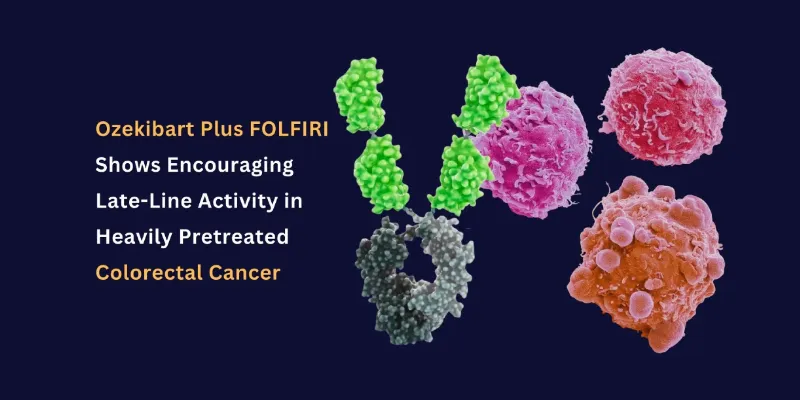
Ozekibart is a tetravalent death receptor 5, DR5, agonist antibody designed to trigger tumor-biased cell death through DR5 activation. Beyond colorectal cancer, the drug has also advanced in chondrosarcoma. In April 2026, Inhibrx submitted a Biologics License Application to the FDA for ozekibart in conventional chondrosarcoma. The submission follows positive results from the randomized ChonDRAgon study, where ozekibart reduced the risk of progression or death by 52% compared with placebo and more than doubled median progression-free survival, to 5.52 months versus 2.66 months.




Comments
No Comments Yet!